


How Often Should Carpet Be Replaced in a Rental Property?
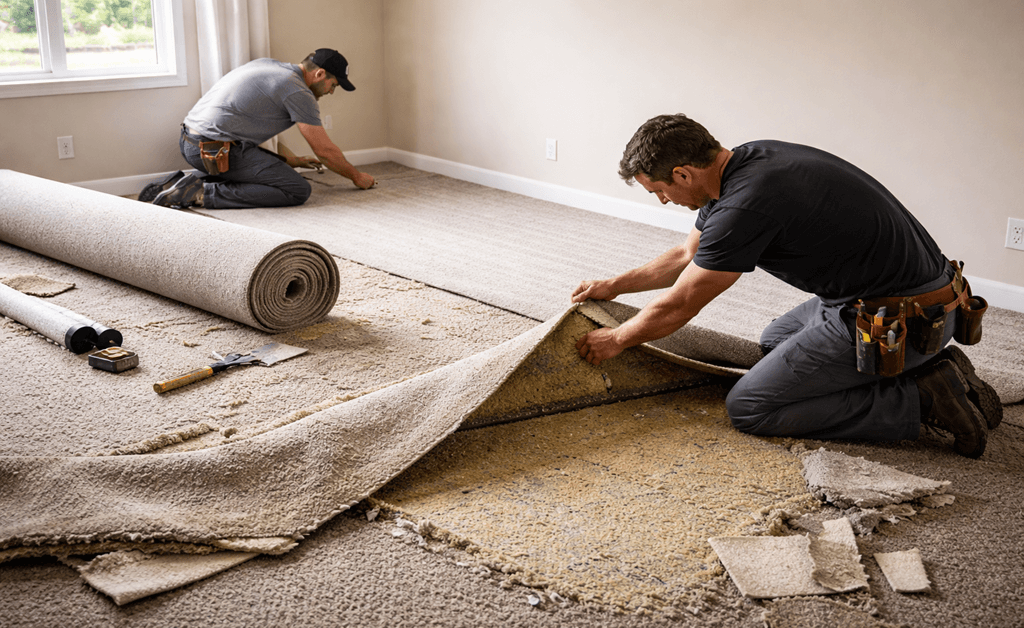
As property managers at First Class Property Solutions, we are aware of the challenge of maintaining budget and satisfying tenants at the same time. One of the areas we are asked about most is flooring. A common question is this: how often should carpet be replaced in a rental property?
The answer is not always clear-cut. Although there are some general guidelines, every carpet in a rental property is unique. Sometimes, knowing when to clean and when to replace will save you money and keep your property’s value high. Now, let’s take a look at the average rental carpet lifespan and when it’s time for an upgrade.
Factors That Determine Carpet Lifespan
The lifespan for most manufacturers is a minimum of 10 years with proper maintenance. But in a rental situation, the lifespan is a different story altogether. Typically, the lifespan for rental-grade carpet is between 5 and 7 years on average.
There are a number of variables which come into play in this equation. The quality of the carpeting being used is the most significant factor. High-grade nylon fibers will always have a longer life than lower-grade polyester found in some rental units. Foot traffic is another significant factor. A carpet in a single-occupant apartment will have a much longer life than in a four-member family apartment with pets.
Another area where maintenance plays a huge part is cleaning. Cleaning the carpets professionally between tenancies adds many years to their lifespan. If dirt is allowed to penetrate deeply into the backing, it acts like sandpaper, working its way from the inside out each time it’s walked upon.
Signs That It’s Time to Let Go
Occasionally, all that is called for is a professional steam cleaning of the unit. Other instances call for nothing but replacement. Our inspections always look for certain warning signs.
Odors are one of the biggest deal-breakers. If the carpet smells like pets, smoking, or mildew, no matter how well it is cleaned, it may be time to say goodbye to the carpet. This is because the smell may mean the problem is in the padding or subfloor.
Visible signs of wear and tear that may pose hazards to safety are also a sign that it is time to replace the carpeting. Tears, rips, or seams that are coming apart may lead to accidents, such as falling, by tenants. Matting in areas where there is much foot traffic, such as hallways or living room centers, is an indication that a rental property is not well maintained and thus unattractive to potential tenants. When fibers are pressed flat and do not recover, it is time to replace the carpeting.
Stains are problematic. Although some can be removed, heavy staining or bleach marks are not very aesthetic. If you are attempting to attract quality tenants, displaying a rental property with stained floors is not a good indication of your property management.
Legal & Ethical Issues
In addition to appearance, there are legal standards to take into consideration. Most landlord/tenant legislation requires landlords to provide a safe living condition. Although old carpeting is not necessarily a violation of health codes, moldy, unsanitary, or dangerous carpeting is.
Another thing to be aware of is depreciation. For tax purposes and security deposit deductions, carpet is generally considered to be depreciated over a period of 5 to 7 years. What this means is that should a tenant damage a 10-year-old piece of carpet, you cannot hold them responsible for replacing it because the carpet has no value left on the books. This commonly leads to the question, do landlords have to replace carpet? The answer may depend on the legal framework in your area and the condition of the flooring.
Balancing Cost and Value
It is always a challenge to determine the right time to replace the carpet. You need to ensure the longest possible life of your asset without affecting the attractiveness of your rental property.
In our Oklahoma property management company, we recommend that landlords look beyond flooring costs and consider it as an asset that will retain their tenants. New and clean flooring will always lure better tenants who not only stay longer but also maintain the property. Although it may look cheaper to extend the life of new flooring by patching it for another year, it may end up costly if new tenants are discouraged by old flooring.
If you're not sure whether your flooring is in good condition or not, give us a call. Our property management services at First Class Property Solutions are designed to make your life easier!
Share this post