

How Do You Determine Depreciation on a Rental Property?
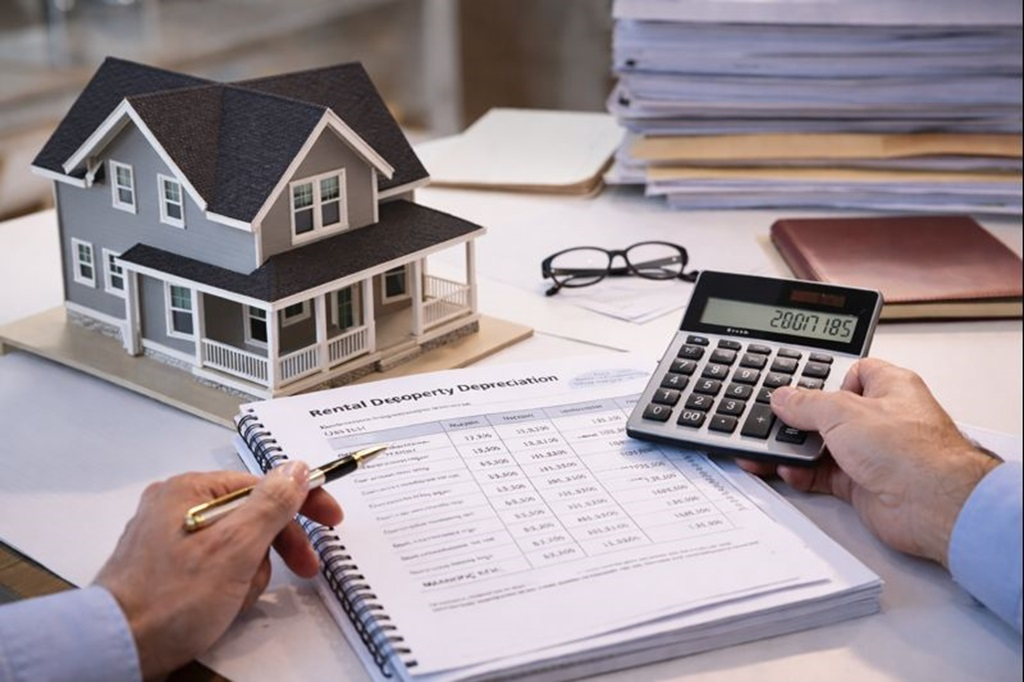
As property managers, we’ve been asked many questions by landlords and investors about ways they can optimize tax deductions. In our view at First Class Property Solutions, one of the most powerful, yet often untapped, tax breaks is depreciation. By being knowledgeable about how to determine depreciation on rental property, you can shelter a great deal of income from taxes - an essential consideration in markets like Yukon, Oklahoma, property management.
Now, let's get into exactly what depreciation is and how you can calculate depreciation on rental property.
What is Rental Property Depreciation?
Depreciation is considered a tax write-off that helps you recover the value of your rental property over time. The IRS takes into account that a physical asset like a property has a limited lifespan and that depreciation is used as a means of valuing this loss of value over time. You can save thousands of dollars each year, depending on the circumstances.
Let’s see why depreciation is so lucrative:
You don’t have to pay any money for it, meaning that any depreciation you can potentially write off won’t have any effect on your expense funds or other funds that you have on hand.
Understanding IRS Rules on Depreciation
There are rules specified by the IRS on what can be depreciated and for how many years. To depreciate residential rental property, you have to depreciate it over a period of 27.5 years on a straight-line basis.
One point worth remembering is that only buildings can be depreciated. No depreciation is required for land because land is never consumed and thus never depreciates. If this point is remembered, it becomes very helpful when calculating depreciable basis.
Calculation of depreciable basis:
Depreciable basis is the amount used to calculate depreciation for a rental property as your yearly deductible depreciation expense.
How we calculate depreciable basis is as follows:
Begin with your property's basis, normally consisting of its purchase price and certain fees associated with its close of sale, such as legal fees, fees for recording, and title insurance. Do not include any fees for the land itself.
To distinguish between the value of land and buildings, you can refer to your property tax assessment. Assessors of tax usually rate the value of land and buildings separately. You can then calculate your purchase price based on this rate of value. Say, for instance, buildings constitute 80% of all value, then you can rate your purchase price based on this percentage.
If you have made capital improvements on a property after purchasing, you would add that amount on to your depreciable value. Capital improvements will extend or enhance value, considerations of which would be a roof or an HVAC system.
Applying the Straight-Line Depreciation Method
Now that you know your depreciable basis, the next step is simple. To calculate this, all you need to do is divide your depreciable basis by 27.5 years. How do you determine depreciation on a rental property? Perhaps an example is the best way to see it in action.
Let’s say that your depreciable basis is $275,000, which means that your yearly depreciation write-off would be $10,000 (275,000 ÷ 27.5). So, each year, you get to deduct $10,000 from your taxable rental income for a period of 27.5 years.
You need to remember that depreciation on a property begins as soon as you put it into service, and this is not necessarily when you buy it. You can be considered as putting a property into service as soon as it is available for rent.
Utilizing Depreciation for Your Investment Plan
Depreciation is an extremely important aspect of rental property investing, and we strongly suggest consulting a tax professional on your tax returns to calculate depreciation on rental property accurately.
Maintain accurate records of your property's cost, value of improvement, and depreciation, as this information becomes critical if you decide to sell the property, as you would have to calculate your depreciation recapture.
By understanding depreciation, one can better evaluate property purchases, improvement projects, and overall investment plans. If applied effectively, depreciation is one of the most powerful techniques available to a rental property investor!
FAQ's
HOW MANY YEARS DO I DEPRECIATE RENTAL PROPERTY?
Most residential rental properties are depreciated over 27.5 years under IRS rules. Commercial rental properties usually have a 39-year depreciation schedule. The depreciation period starts when the property is ready and available for tenants.
WHAT DEPRECIATION METHOD SHOULD I USE FOR RENTAL PROPERTY?
The most common method is MACRS (Modified Accelerated Cost Recovery System). For residential rentals, owners normally use the straight-line method, which spreads the deduction evenly across 27.5 years. This is the standard method used for most rental homes in the U.S.
WHAT ARE COMMON DEPRECIATION MISTAKES?
A common mistake is including land value in depreciation calculations, since land cannot be depreciated. Some property owners also use the wrong property life or forget to track upgrades separately from regular repairs. Missing depreciation deductions or using incorrect records can also create tax issues later.
WHAT HAPPENS WHEN A RENTAL PROPERTY IS FULLY DEPRECIATED?
After a property is fully depreciated, you can no longer claim yearly depreciation deductions on the building. You can still rent out the property and earn income from it. If you decide to sell, part of the profit may be taxed through depreciation recapture rules.
Share this post