


Does Landlord Insurance Cover Tenant Damage?
There is always a nervous feeling when handing over the keys to a new tenant. Being a rental property management company, we know that some houses are returned in impeccable condition, and others require considerable repairs. However, property damage is a part of life for a landlord. Thus, most property owners are interested in whether someone has to deal with paying for this kind of damage, just as a tenant may later need to negotiate a rent increase with a landlord.
You may think that a landlord policy provides protection against all possible damages. Nevertheless, in reality, this matter is more complicated since not all kinds of damage are treated the same. To better manage the situation, it is crucial to understand the classification of damage made by insurers.
Helping property owners to navigate insurance matters, we have seen and heard everything at First Class Property Solutions. In this post, we’ll share what kind of damage insurance pays off, how tenants' mistakes impact insurance benefits, and how you can protect your property in advance while understanding when landlord insurance covers tenant damage.
Differentiating Kinds of Tenants' Damages
Does landlord insurance cover tenant damage? To determine what kinds of damages your insurance covers, it is necessary to understand its classifications. Generally, there are three main types of damage made by tenants:
• Accidental damage
• Malicious damage
• Normal wear and tear
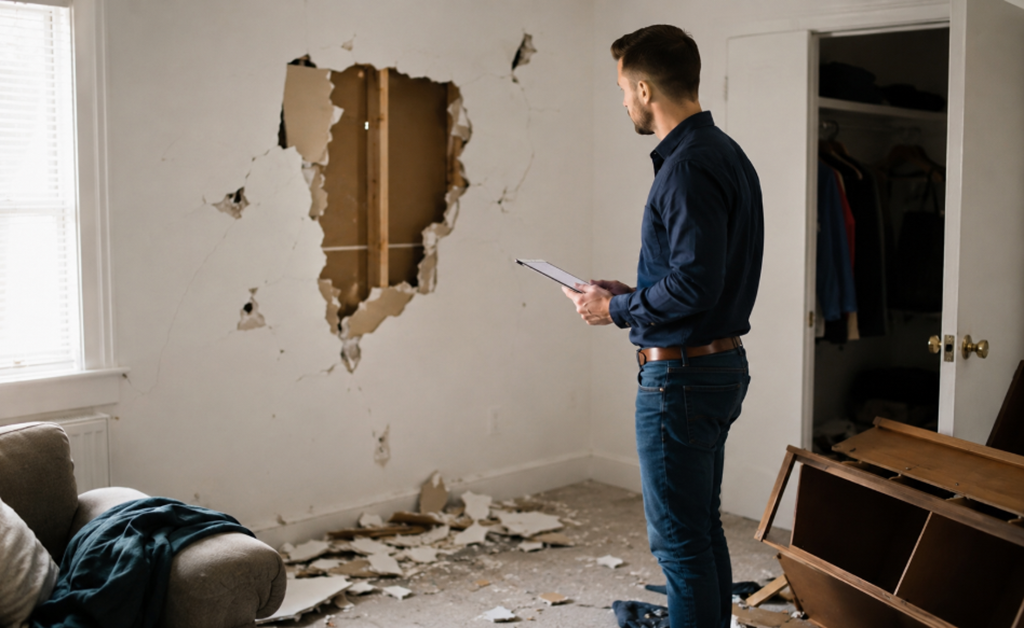
As you probably guessed, each type represents various situations. Accidental damage includes unintended incidents such as a fallen cast iron pan breaking a tile on the floor. Malicious damage includes all kinds of intentional destruction of your property, starting from punched holes in the walls and broken windows and ending with destroyed furniture.
When it comes to normal wear and tear, insurers expect that a rental house will become a bit older over time due to people using it. Such examples include faded curtains, scuffs on the baseboard, and thinning carpets. All these types of damages will be treated quite differently when it comes to filing a claim.
Insurance Policies: Coverage and Exclusions
Does homeowners insurance cover renters damage? All insurance policies are very similar since they aim at covering unexpected situations. Consequently, if your tenant accidentally damages something or destroys the property on purpose, a standard landlord policy is highly likely to cover the cost of repairs.
In case your tenant decides to vandalize the living room just before moving, you will likely be able to get the necessary money for restoration works. However, it is crucial to make sure that there is a document stating the damage since the landlord insurance company may refuse to pay off.
Another kind of damage that is widely covered by the policies is an accident that leads to damages. For example, if your tenant accidentally started a small kitchen fire while cooking, the insurance will help you fix the cabinets and countertops. However, it is recommended to check your insurance policy since some of them require purchasing an additional add-on covering accidental damage by tenants.
Coverage Exclusions in Landlord Insurance
There are numerous reasons why some landlord insurance claims are denied. The most popular one is the damage caused by wear and tear. Insurance companies understand that people cannot leave a house in the same condition after living in it for a while. As a result, you will not be able to ask to replace the thinned out carpets after five years. Moreover, insurers cannot provide financial support to those asking to paint over furniture scuffs on walls.
It is vital to respond to any maintenance issues of your property instantly. If a tenant told you that there was a small leak under the sink, it means that you must solve the problem before it gets even worse. Otherwise, the damage will be considered your fault and no one will compensate it.
Besides, a standard landlord insurance policy does not cover the belongings of a tenant who lives in your house. Thus, in case of a pipe bursting and the water destroying your tenant's TV, they should contact their own insurance provider.
FAQs
Can We Use the Security Deposit for Insured Damage?
Yes, it is possible to use the security deposit for covering the cost of the damages that have occurred. If the damage exceeded the security deposit, the landlord policy provider reimburses the rest of the sum.
How Fast Should I Notify My Insurer About the Damage?
It is essential to file a claim as soon as possible, usually within several days after the incident. Insurers follow certain deadlines and will definitely deny the claim if you wait too long. Therefore, the sooner you inform them, the better.
Will the Insurance Cover the Loss of Rent While the Repairs Are Being Conducted?
Yes, it can cover the loss of rent if the policy has this option. Loss of rent will compensate the losses if you cannot rent out the apartment because of the covered damage. For instance, if your tenant accidentally starts a large fire, you may not be able to let anyone use the house for three months.
Conclusion
Does landlord insurance cover damage by tenants? Having landlord insurance is critical for protecting your assets. With a proper understanding of all classifications, you will be able to make sure that your property will remain safe from any damage. Managing such cases requires much effort and expertise, which is why we recommend turning to our friendly team at First Class Property Solutions.
Share this post